
Which AI platform should I buy, and why?
Buy only the AI platform that solves a task you already do every week. What to check before paying, the 2026 tool menu with prices, and a one-afternoon test to decide.

If the honest answer turns out to be 'none of these fit', that is usually the moment when AI consulting for small businesses pays for itself: an outside pair of eyes before signing anything.
You open Instagram and there is another AI tool that "changes everything". Your inbox holds three free trials about to expire. And somewhere in your card statement live two subscriptions you used exactly once. The question in 2026 is no longer whether AI works: it is which one of them deserves your money month after month, and why that one and not its neighbor.
First things first: platform or tool?
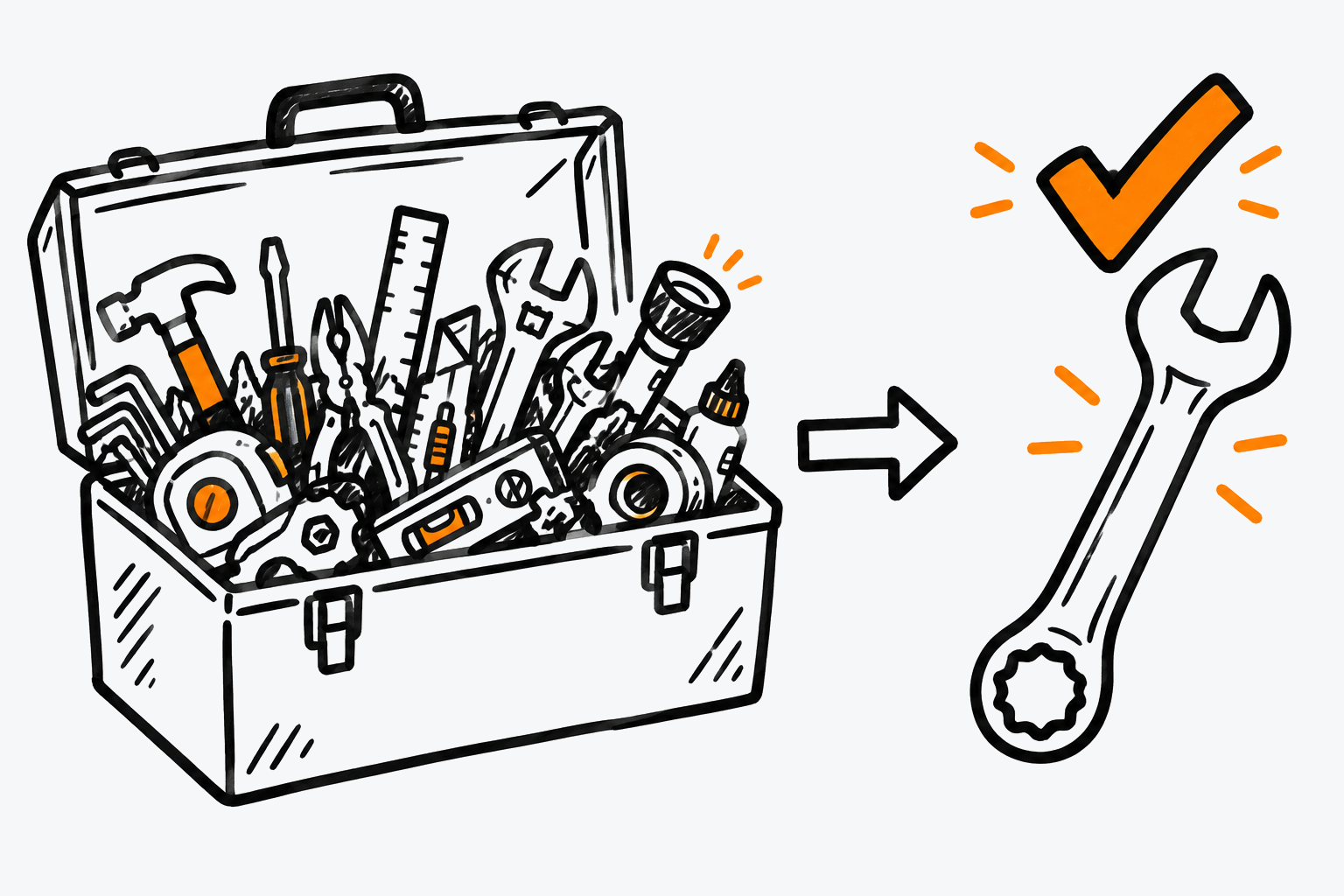
Before comparing prices, the universe needs sorting, because this is where most bad purchases start. A tool does one thing and does it well: it records your meetings and hands you the summary, turns your notes into a presentation, generates voices for a video, helps you write code. A platform is the whole toolbox: it analyzes data, builds and trains models, automates entire processes, decides who can do what inside your organization, and wraps security and governance around all of it.
The confusion comes from both being advertised the same way: "AI for your work". But buying a platform when you need a tool is like renting an industrial kitchen to make yourself a sandwich. And the other direction hurts too: trying to run the whole operation on a pretty app that only knows one trick.
Full platforms bring capabilities that sound impressive: workflow orchestration, no-code model building, synthetic data generation, automatic document classification, summarization, data extraction. They are real and valuable capabilities when your operation needs them. The honest question is whether you need them today.
A quick example. If what you want is for every meeting to be recorded, transcribed and summarized with nobody taking notes, a fifteen-dollar-a-month tool solves it today. Buying an enterprise platform with data governance and model training for that would be paying for the whole industrial kitchen for the same sandwich. When you genuinely need the platform (several connected processes, sensitive data, many people using it), you will know: the loose tools start falling short and copy-pasting between them becomes somebody's job.
The practical rule: if your need fits in one sentence ("I want my meetings summarized on their own"), you are shopping for a tool. If your need sounds like a full process ("I want orders to come in, get classified, get answered and get logged without anyone touching them"), you are talking about a platform. Most people and most small teams live in the first world, and there the decision is far cheaper and simpler than it looks.
What is actually worth checking before you pay
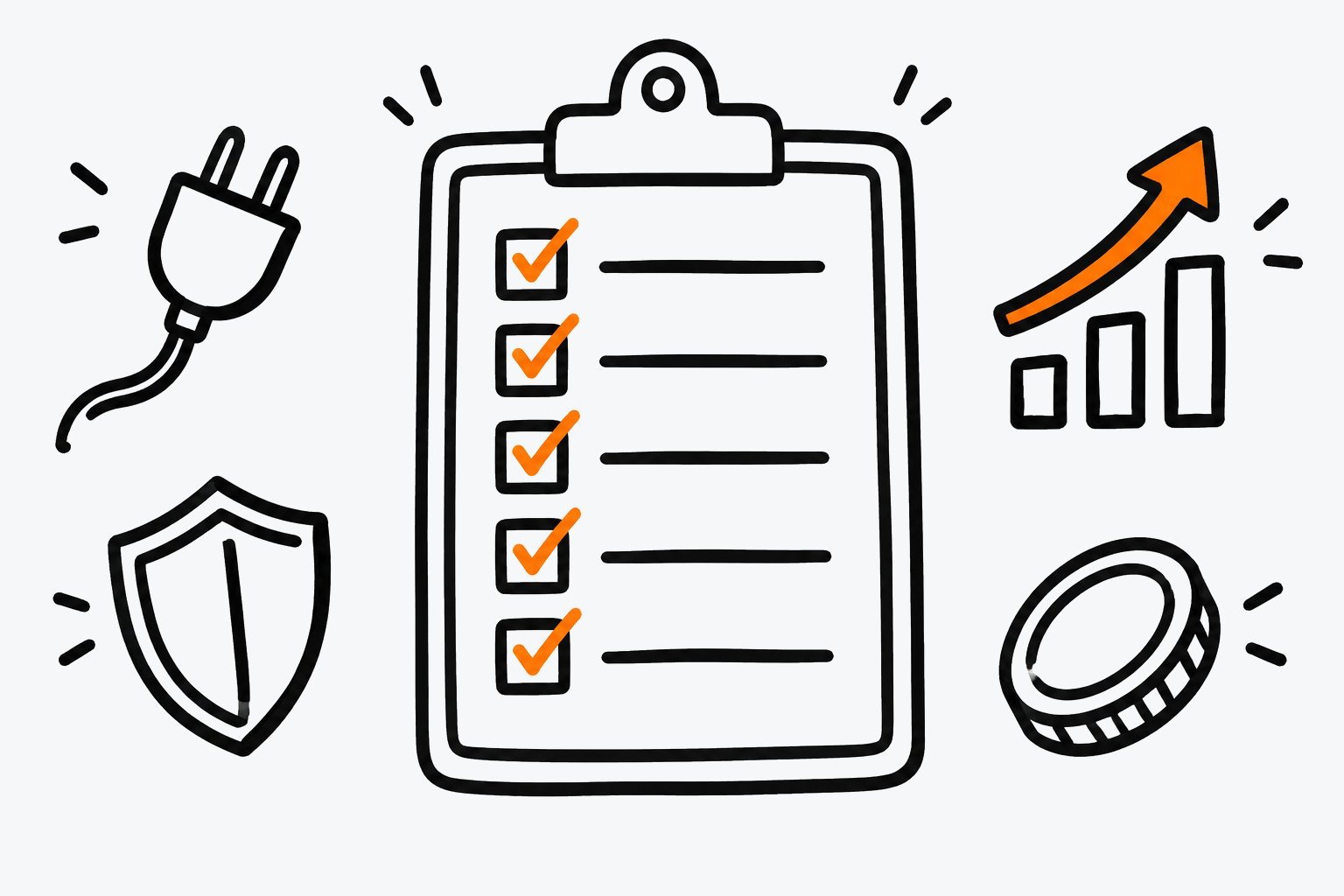
Tool or platform, six filters separate a good purchase from a phantom monthly charge:
- What it really automates. Not what the ad promises: what it does with your real work. That is what the free trial is for. If it has not saved you measurable time in two weeks, that is your answer.
- Connection with what you already use. The best isolated tool ends up abandoned. Ask whether it connects to your email, your calendar, your files, your sales system. Every manual copy-paste is a hidden tax you pay every day.
- Whether it grows with you. Today it is just you; in six months, can your team use it without starting over? Check whether the next plan up is reasonable or whether the price explodes exactly when you start depending on it.
- Security and control. Where does your data live? Who can see it? A serious platform lets you assign role-based permissions and tells you clearly whether your information is used to train models. If that answer is smoke, that is also an answer.
- Support and community. When something breaks (and something will), is there clear documentation, an active forum, someone who replies? A tool abandoned by its own maker is a risk dressed as a bargain.
- The real price, not the entry price. Many tools advertise a cheap plan that falls short within a week, and the plan that actually works costs three times more. Before deciding, price out the plan you would truly use, at your real workload.
The 2026 menu: what each one does and what it costs
To ground the conversation, here is the landscape of the tools people are actually using this year, with each one's specialty and its entry price in US dollars per month. These are list prices as reported when this was published, and almost all of them have a free plan so you can try before spending a cent:
| Tool | What it shines at | From (USD/month) |
|---|---|---|
| ChatGPT | Writing, document analysis, video | 8 |
| Gemini | Complex research and images | 7.99 |
| Veo | Cinematic video from text | 19.99 |
| Claude | Code and process automation | 17 |
| Grok | Fact-checking, images and video | Free; plans up to 300/year |
| NotebookLM | Asking your own documents | 8.99 |
| Lovable | Web apps without coding | 25 |
| ElevenLabs | Realistic voices and voice agents | 5 |
| Synthesia | Avatar video for training | 18 |
| Higgsfield | Creative images and video | 9 (no free plan) |
| Gamma | From notes to presentations | 9 |
| Fathom | Recording and summarizing meetings | Free; from 15 |
Three quick observations about this menu. First: the general assistants (ChatGPT, Gemini, Claude) look more alike every month on the basics, so the real difference is which ecosystem you already live in. Second: single-task tools are where money pays back fastest, because they solve something concrete from day one without asking you to change how you work. Third: the free plan is almost always enough to decide; paying before trying is buying blind.
How to decide in one afternoon
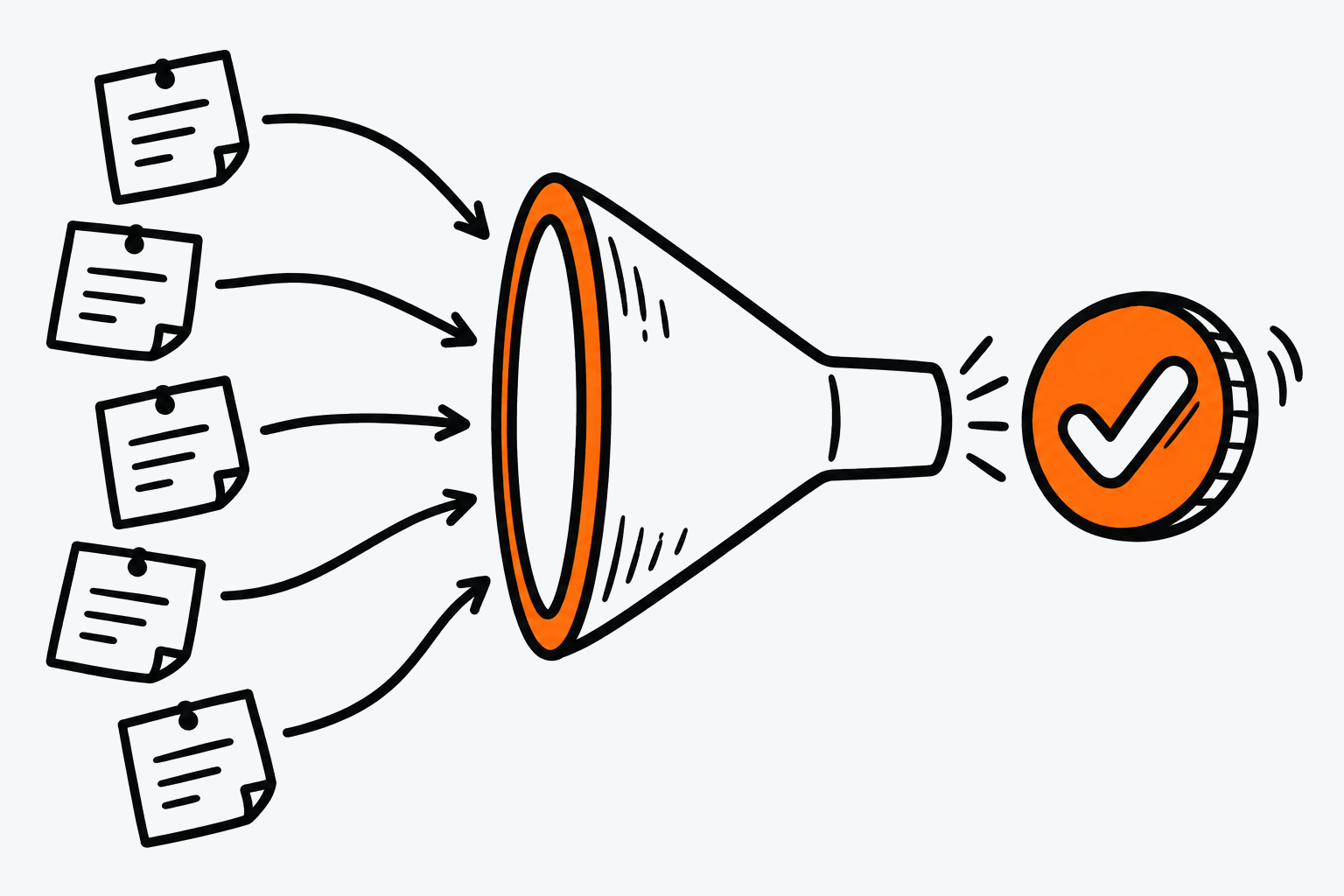
You do not need a committee or a forty-column spreadsheet. You need one afternoon and this order:
- Write down your five most repeated tasks of the week. The real ones: answering the same thing ten times, summarizing meetings, building presentations, hunting for information across documents.
- Mark the one that costs you the most time or the most patience. That is your candidate.
- Open the free trial of the tool that attacks that task and feed it real work, not toy examples. Upload your document, your meeting, your presentation.
- If it convinces you, pay for one month. Not a year. The annual discount exists so you stop evaluating.
- After thirty days, review your own usage. Did you open it three times or more? It stays. Two or fewer? It goes, no guilt and no ceremony.
The questions that disarm any demo
Once you are serious about a platform, these questions are worth more than any comparison chart on the internet:
- Where is my data stored, and can I export all of it if I leave?
- Is my information used to train their models? Can I turn that off?
- What happens to my files and my history if I cancel?
- Can I control what each person on my team can see and do?
- How do they announce price or terms changes?
A trustworthy platform answers all of this in writing, without squirming. The one that does not has already answered you.
What to do this week
- Audit your charges: search your card statement for AI tool names and count how many subscriptions you pay today. The number usually surprises.
- Pick one single task from your weekly list and run the one-afternoon test with one single tool. One, not five.
- Set a thirty-day reminder for every trial you activate, so you decide with usage data instead of first-day excitement.
Questions to ask yourself
- Which task would I still be doing even if AI did not exist? That is where it pays.
- What is an hour of my time worth, and how many hours does this monthly fee hand back to me?
- Am I paying for what I use, or for what I might use someday?
In short
There is no "best AI platform": there is the one that solves the task you repeat every week. Decide by task, not by trend, try free before paying, pay one tool at a time, and review every month with your own data. The person who chooses well is not the one who collects the most tools, but the one who can explain in one sentence what each subscription is for.
Sources:
- IBM Think, "Cómo elegir la mejor plataforma de IA": https://www.ibm.com/mx-es/think/insights/how-to-choose-the-best-ai-platform?ref=jonathancanales.com
- Synthesia, "Las 12 mejores herramientas de IA para 2026 (que las personas realmente utilizan)": https://www.synthesia.io/es/post/herramientas-de-ia?ref=jonathancanales.com
Was this article helpful?