
The perfect plan is the one that never starts: experimenting for real
There are two ways to face AI in a company. The first: wait until you have the perfect plan, the perfect use case, the perfect moment. The second: try something small this month, see what happens, and adjust. The first one feels responsible. The second one feels improvised.


There are two ways to face AI in a company. The first: wait until you have the perfect plan, the perfect use case, the perfect moment. The second: try something small this month, see what happens, and adjust. The first one feels responsible. The second one feels improvised. Guess which one works.
The Harvard Business Review article this series is based on cites a Stanford study that should hang on the wall of every boardroom: every successful AI project they examined used an iterative, test-and-learn approach instead of traditional waterfall planning. Every single one. And there's more: 61% had experienced at least one prior failure, and in none of those cases was anyone punished for failing.
From certainty to experimentation
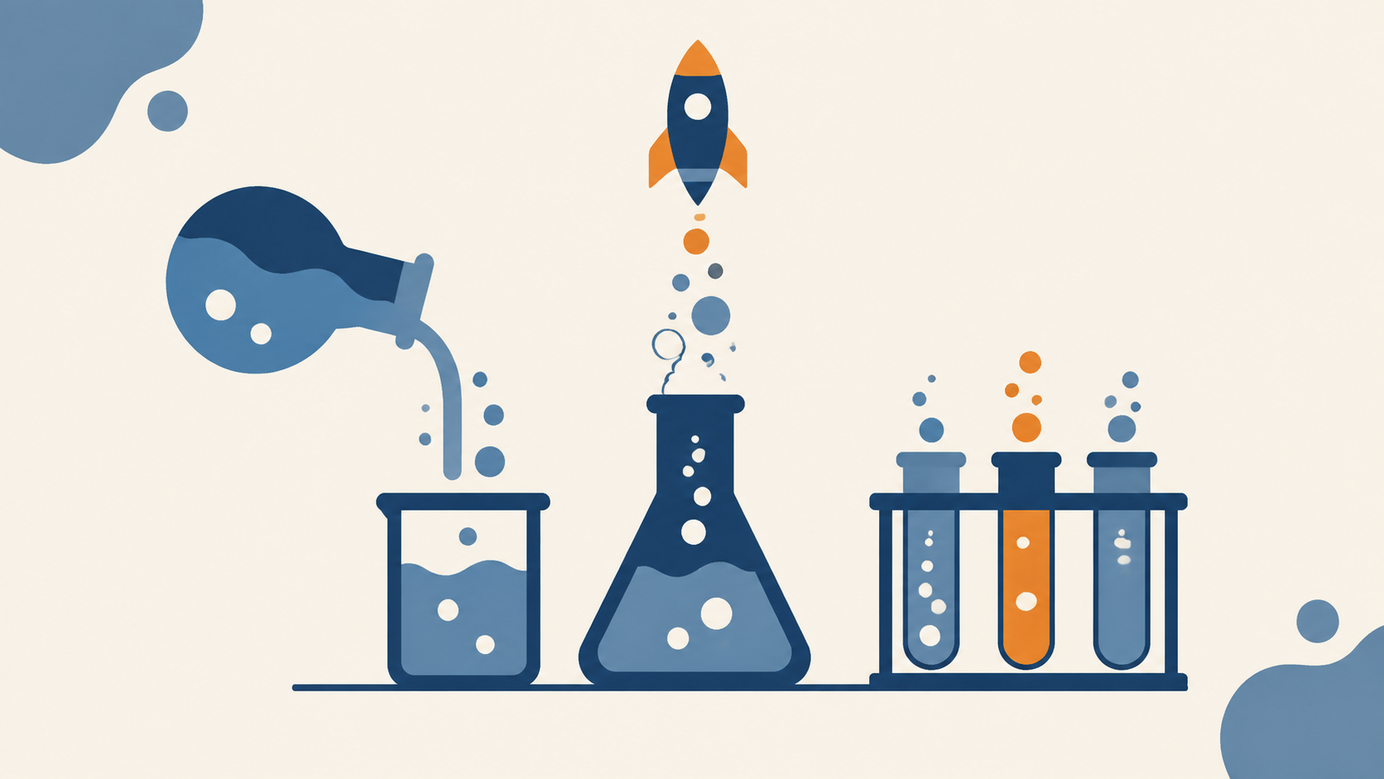
The second big cultural shift the authors propose is moving from demanding certainty before acting to making experimentation the norm. This isn't about acting recklessly: the article is clear that ambiguity is no excuse for rashness. It's about a disciplined cycle: start small, learn fast, and use evidence to decide what to expand, what to change, and what to stop.
AI, used well, speeds up that cycle: it helps detect market signals, summarize what customers are saying, generate options, and simulate scenarios before you bet. What it doesn't do is remove uncertainty. Whoever waits for it to disappear before moving will wait a long time, and will watch the ones who tested first go by.
The uncomfortable data about permission
Here's a number from the article that stings: today only half of employees feel encouraged to experiment with new ideas. Read that again. In half of companies, people don't feel they have permission to try. And then we wonder why transformation doesn't take off.
The authors are direct: experimentation is a behavior you can design for. It grows with two things: explicit permission and psychological safety. And they add a nuance I love because it's counterintuitive: clear guardrails speed things up. In their client work they found that teams move faster when they understand exactly where they have discretion and where they don't. Well-placed boundaries don't slow the experiment down; they give people the confidence to run inside them.
The HubSpot case
The article describes what HubSpot is doing, and it's worth reading because it's a copyable menu: they added "be bold, learn fast" to their company values; they held 20 company-wide AI learning days in 2025; they gave employees protected learning time; they opened channels for sharing experiments; and they shortened their planning cycle from annual to six-week sprints. The stated goal isn't to be right every time: it's to reduce uncertainty as they go.

Results? The article reports two: their talent acquisition team embedded AI into the hiring funnel and cut 10 days off time-to-hire, and AI-powered marketing workflows improved email conversions by 82%. Notice the pattern: neither result came from a master plan. They came from teams experimenting on real processes.
The bias toward waiting
It's worth naming why waiting feels so good: postponing a decision doesn't produce a visible error, while acting can. An error from action has a date and a culprit; the cost of not acting gets distributed silently across all the following months. That's why organizations comfortable with waterfall aren't stupid: they're optimizing for not being wrong in public, not for learning. The problem is AI changes too fast for that optimization to come cheap.
What an "experiment" is in a normal business
In a small company, an experiment doesn't need a lab or an English name. It's this: a small hypothesis ("if we use AI for X, Y will happen"), a short window (two to four weeks), a measure agreed before starting, and a decision at the end: scale, adjust, or kill. What matters is that all four parts exist. Without a hypothesis it's a whim; without a measure it's an anecdote; without a final decision it's a zombie pilot, one of those that walks around for months without anyone knowing if it's alive.
And failure: this is where culture gives itself away. If the person who proposed an experiment that didn't work gets mockery, punishment, or the classic "see, I told you so," you learned something priceless: in your company people don't experiment, they survive. The Stanford study cited in the article found success precisely where failing didn't cost anyone their reputation.
Rhythm matters more than size
If I had to compress the HubSpot case into one idea for a small business it would be this: the powerful part wasn't any single experiment, it was the rhythm. Moving from annual planning to six-week cycles means that in the time you used to spend debating the plan you now run eight rounds of testing. The competitor who beats you isn't the one who got it right the first time; it's the one who, by the time you finish planning, has already failed three times and learned four.
What to do this week
- Pick one annoying process and define a two-week experiment with a hypothesis, a measure, and a decision date. Write it in five lines; if you need more, it's too big.
- Put the guardrail in writing: what the experiment can touch and what it can't (customer data, money, brand). You'll see people move faster with clear limits than with total freedom.
- In your next meeting, ask about an experiment that failed. If there isn't one, you're not experimenting: you're waiting.
Questions to ask yourself
When was the last time someone on my team brought me an idea I didn't ask for?

What happened to the last person who tried something new and it didn't work out?
How many pilots do I have alive right now, and when do I decide on each one?
The takeaway
Total certainty isn't coming, and while you wait for it your competition has already run three rounds of testing. Experimenting for real isn't betting blind: it's a small hypothesis, an honest measure, clear guardrails, and timely decisions. That, plus making sure failing well costs nobody their reputation.
Source: "There's No Such Thing as an AI-Ready Culture", Sarah Jensen Clayton, Michael Welch and Khoi Tu (Korn Ferry), Harvard Business Review, October 5, 2026. https://hbr.org/2026/10/theres-no-such-thing-as-an-ai-ready-culture
Was this article helpful?