
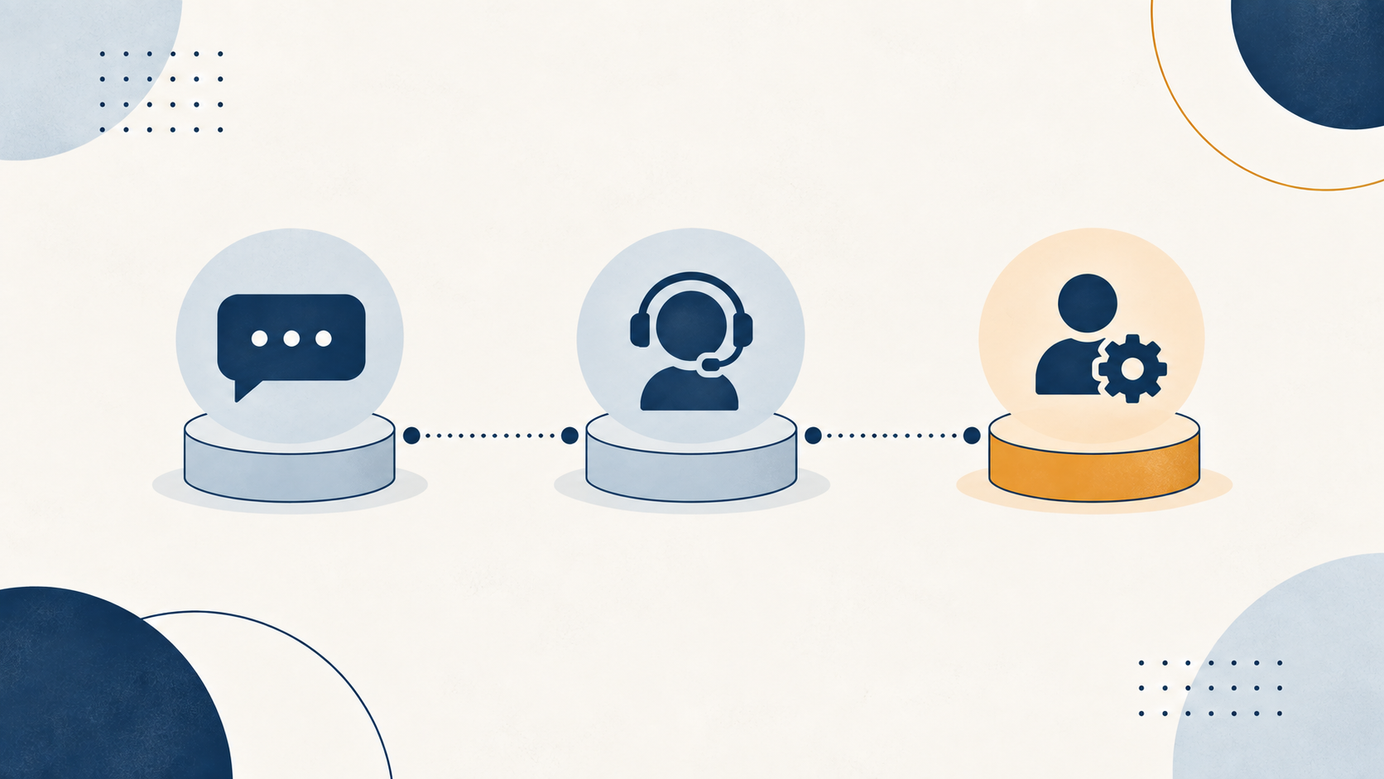
Do you need a chatbot, a copilot or an AI agent?
Short answer: choose by action and authority, not the marketing label. If you need answers or drafts, try a chatbot. If a person needs suggestions inside existing tools, consider a copilot.


This question matters more every month: AI agents for business have moved from demos into daily operations, and the choice between a chatbot, a copilot and an agent now shapes real budgets.
Short answer: choose by action and authority, not the marketing label. If you need answers or drafts, try a chatbot. If a person needs suggestions inside existing tools, consider a copilot. If software must carry out steps across systems, assess an agent with narrow permissions, oversight and logs. Vendor names overlap; the real decision is what the system can do without you.
Three ways of working
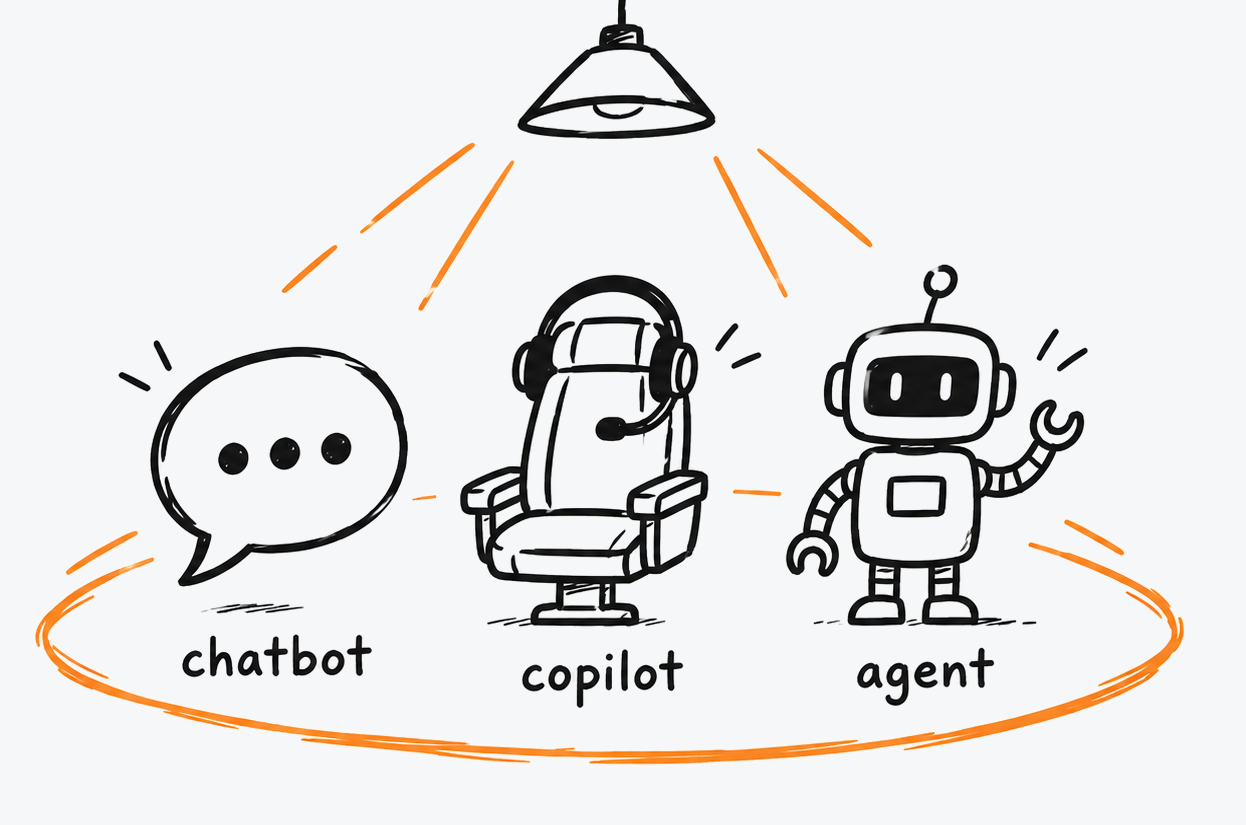
| Form | Typical job | Who decides or executes | Key question |
|---|---|---|---|
| Chatbot | Answer a question or draft on request | A person uses the answer | Is the source clear? |
| Copilot | Assist inside email, documents or a work system | A person reviews and operates | Does review help or add work? |
| Agent | Follow a multistep goal and use tools | May execute within defined permissions | Who authorizes each effect? |
These are practical categories, not universal definitions. Microsoft described Autopilot in September 2026 as having its own identity, memory, computer and recurring work. OpenAI announced an Agents API for building agents with tools and longer-running sessions. Neither commercial label tells you on its own whether a product can send email or change a record in your environment. Microsoft; OpenAI.
The context behind these announcements is in the monthly recap: from AI chat to AI work: agents, September 2026.
Choose with a hypothetical case
You want to reduce internal questions about a policy. First test answers with cited sources and human review. If employees really need help inside their everyday application, test a copilot-style integration. If the task also requires opening a case, assigning it and following up, you now have agent actions: define permissions and approvals before automating. Do not jump to step three because it sounds more advanced.
Four questions to test the choice
- Does the work need knowledge, recommendations or execution?
- Which data is needed, and who is allowed to see it?
- Which error costs more: a wrong answer, a changed record or a sent message?
- What does it take to review and recover from a mistake?
OWASP recommends least privilege, human controls for high-impact actions and logs. These become more important when a system stops merely answering and starts acting. Source: OWASP.
Permissions and authority levels have their own guide: how much authority should you give Copilot Autopilot in your business.
Decision: start with the lowest authority that gets the job done. If a template and search are enough, you do not need to hire an orchestra of agents to ring a doorbell.
Sources
- Microsoft: Copilot, Home, Code and Autopilot (Sep 25, 2026).
- OpenAI: Agents API (Sep 10, 2026).
- OWASP: AI Agent Security.
Was this article helpful?